
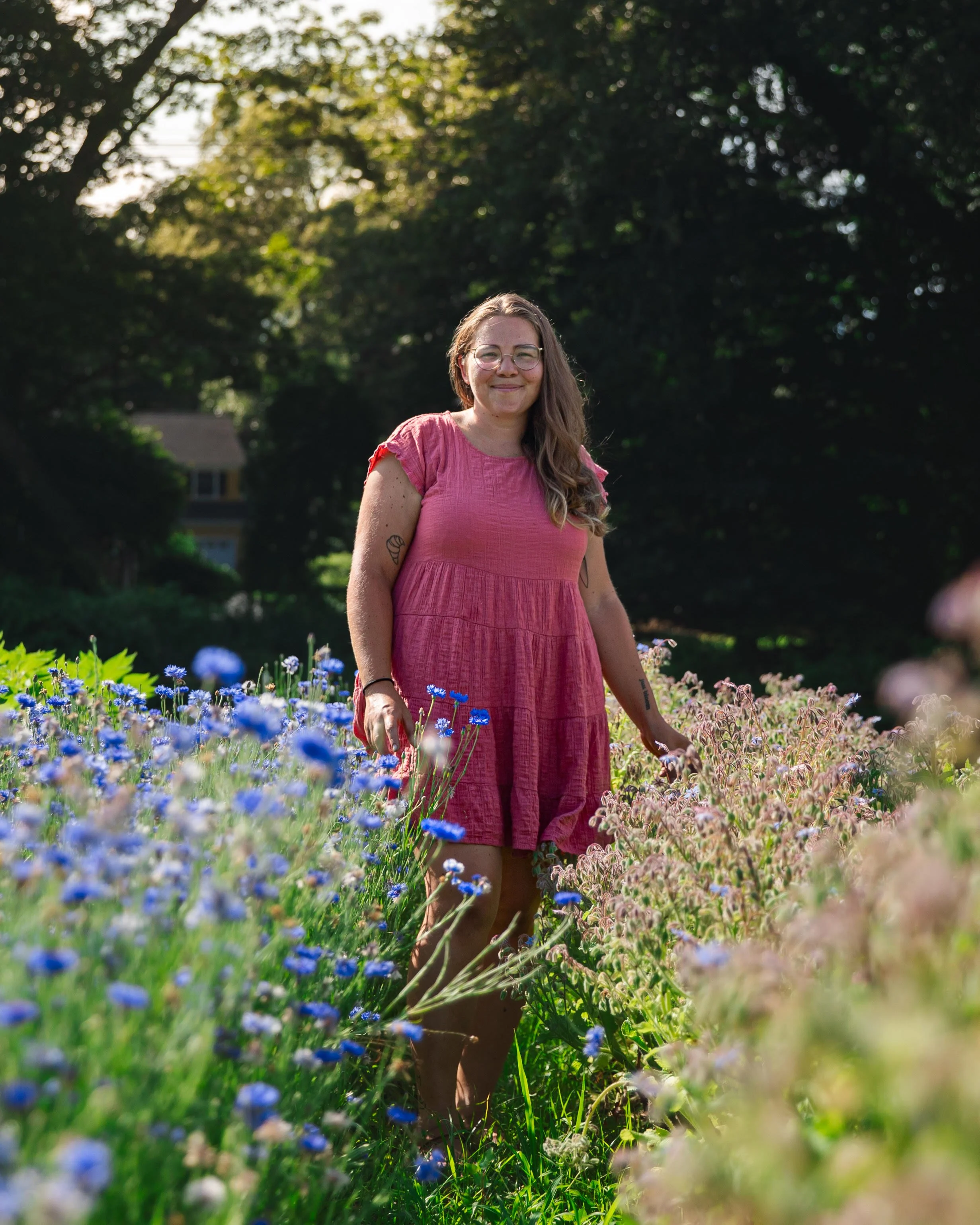
About Sarah Norton and rosemary acres
While studying nutrition and wellness at Framingham State University, Sarah got a summer job working in the farm stand at Hutchins Farm in Concord Massachusetts. The following season she added on a few days in the field and quickly decided it was what she wanted to do as a career. After graduating in 2018 she worked at Hutchins for another season before moving to Waterpenny Farm in Sperryville Virginia for a farming internship in 2019. It was there, at the Northern terminus of Shenandoah National park, that she fell in love with backpacking. During the covid 19 pandemic Sarah moved back home and worked another season at Hutchins Farm while planning for a thru hike of the Appalachian Trail.
In 2021 Sarah took the farming season off and walked over 4,000 miles from Key West Florida to Mount Katahdin in Maine along the Eastern Continental Trail.
In 2022 and 2023 Sarah worked as the assistant manager of Skinny Dip Farm in Little Compton Rhode Island before taking another season off for more backpacking. In 2024 she completed the 800 mile Arizona Trail, Two routes of the Camino de Santiago in Spain, and the 270 mile Long Trail in Vermont. During this time she connected with a friend of a friend that leased land at the old Mainstone Farm in Wayland and her long time dream of starting a farm became a reality.
Sarah started with about ½ acre of herbs, flowers, alliums, and hot peppers in 2025. While also working three days a week for Hutchins she grew her business, selling fresh herbs to restaurants and drying herbs at Food rEvolution in Stoneham to make herb and spice blends as well as teas.
She is excited to continue growing in 2026 while adding vegetable crops to the farm and opening the onsite farm stand 3 days a week.
My farming practices
Keeping in mind my passion for nutritious food as well as my love and respect for the environment I always knew I would follow better than organic practices on my farm. While not organic certified, I completely avoid synthetic herbicides, pesticides, and fertilizers. Instead I focus on biodiversity, encourage beneficial insects, and utilize low till techniques. Maintaining healthy soil and insect habitat help keep pests at bay. When needed I will use organic pest control such as neem oil or kaolin clay. I supplement soil nutrition with heavily applied compost, organic pelleted chicken manure, organic fish fertilizers, crop rotation, and cover crops.